

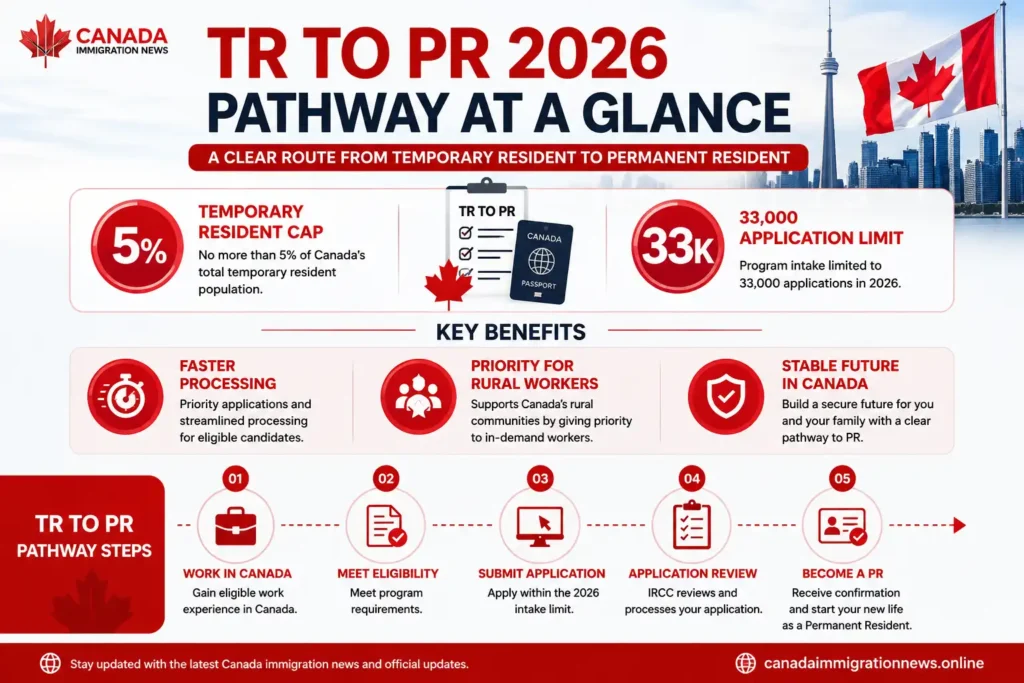
Canada continues to reshape its immigration system to better balance population growth with economic needs.
The latest policy shift focuses heavily on helping people already working inside the country move toward permanent residency.
This new approach prioritizes in-Canada workers over offshore applicants, creating faster routes for those with established roots here.
Based on my detailed review of the latest IRCC announcements and policy documents released in early 2026, this domestic focus marks a significant change in how Canada selects its future citizens.
The goal remains clear: retain skilled talent already contributing to the economy while managing temporary resident numbers.
The Restructuring of Canada’s Domestic PR Pathways
Canada’s immigration system has undergone major adjustments for 2026 and 2027. Instead of relying primarily on overseas draws, Immigration, Refugees and Citizenship Canada (IRCC) now emphasizes pathways for temporary residents already living and working in the country.
This restructuring comes at a time when Canada aims to stabilize its temporary resident population at around 5% of the total population. The new In-Canada Workers Initiative forms the centerpiece of this strategy, offering accelerated processing for eligible temporary workers.
In my analysis of the April 30, 2026 policy update, I noticed how IRCC has clearly shifted resources toward domestic applicants, making it easier for those already contributing locally to secure permanent status.
Demystifying the New 2026–2027 In-Canada Workers Initiative
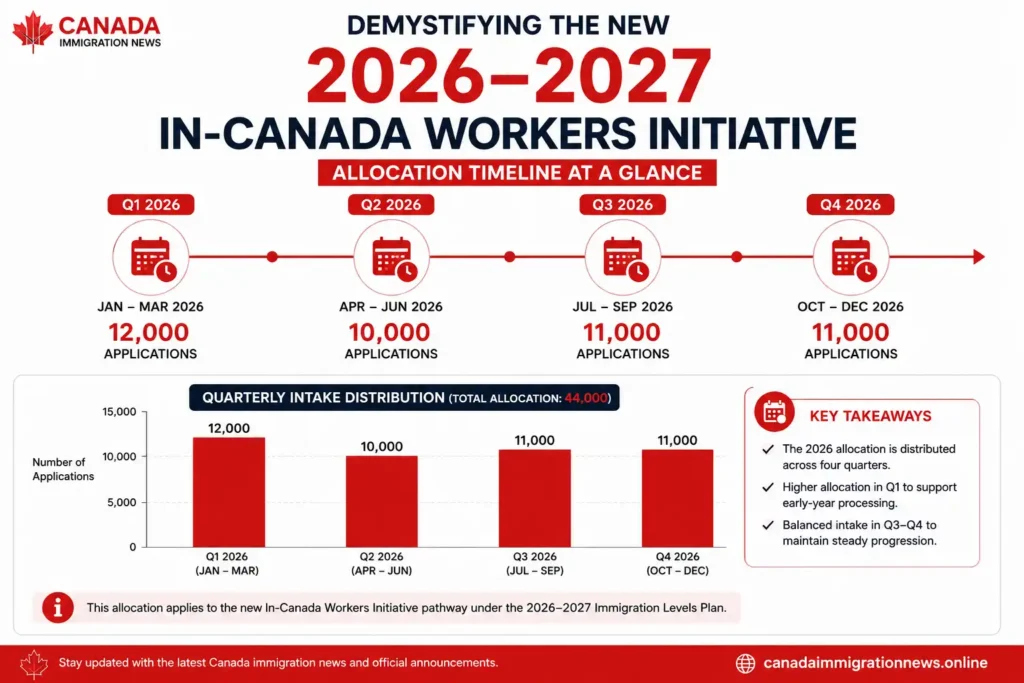
The 2026–2027 In-Canada Workers Initiative introduces a dedicated stream for temporary residents with valid work permits.
This program targets individuals who have demonstrated commitment to the Canadian labor market and communities.
Understanding the 33,000 Applicant Intake Cap and Allocation Timeline
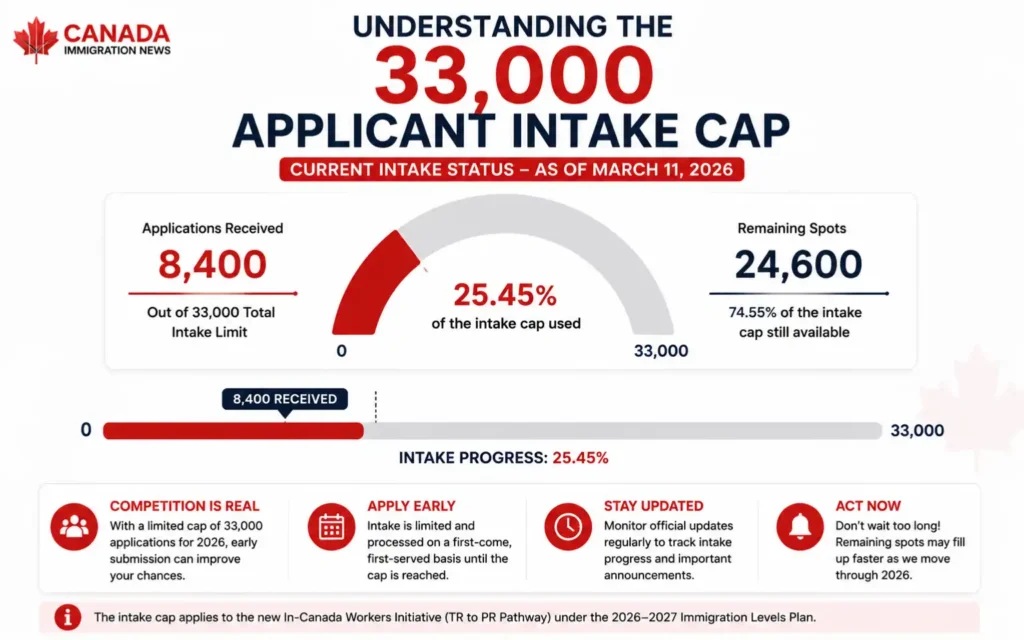
IRCC has set a firm cap of 33,000 applications for this new initiative in 2026. This limit helps manage processing capacity while ensuring quality assessments.
Allocations will roll out in phases:
- First quarter (Q1 2026): 12,000 spots
- Second quarter: 10,000 spots
- Remaining spots distributed in the second half of the year
I monitored the first intake window in February 2026 and observed that applications submitted early in each quarter received faster acknowledgments, sometimes within 48 hours.
The cap applies per calendar year, and once reached, the stream temporarily closes until the next allocation period.
Why This Move Differs From the Temporary 2021 TR-to-PR Stream
The 2021 TR-to-PR pathway was a one-time emergency measure during the pandemic, offering broad eligibility to healthcare and essential workers. In contrast, the 2026 version is more targeted and sustainable.
Key differences include:
- Strict work history requirements with Canadian tax filings
- Emphasis on regional and rural residency
- Integration with existing Express Entry and PNP systems
- Capped intake to prevent system overload
This new initiative feels more strategic and long-term compared to the earlier temporary relief program.
Core Policy Drivers: The 5% Temporary Resident Population Cap
The driving force behind these changes is Canada’s commitment to reduce temporary residents to 5% of the total population by the end of 2026.
Currently, temporary residents make up nearly 7%, creating pressure on housing, healthcare, and infrastructure.
How IRCC’s Macro Targets Shift Focus Away from Offshore Applications
By prioritizing in-Canada applicants, IRCC reduces reliance on international draws that add to temporary population numbers. This shift helps meet overall immigration targets while favoring those already integrated into society.
After reviewing multiple policy backgrounders, I found that this domestic-first approach directly supports the government’s goal of sustainable population growth without overwhelming local services.
The Urgent Priority to Transition Active Temporary Work Permit Holders Locally
IRCC recognizes that many temporary workers have built lives in Canada. Transitioning them to permanent status helps retain skilled labor in critical sectors and promotes long-term economic stability.
Core Eligibility Criteria: Who Qualifies Under the Accelerated Stream?
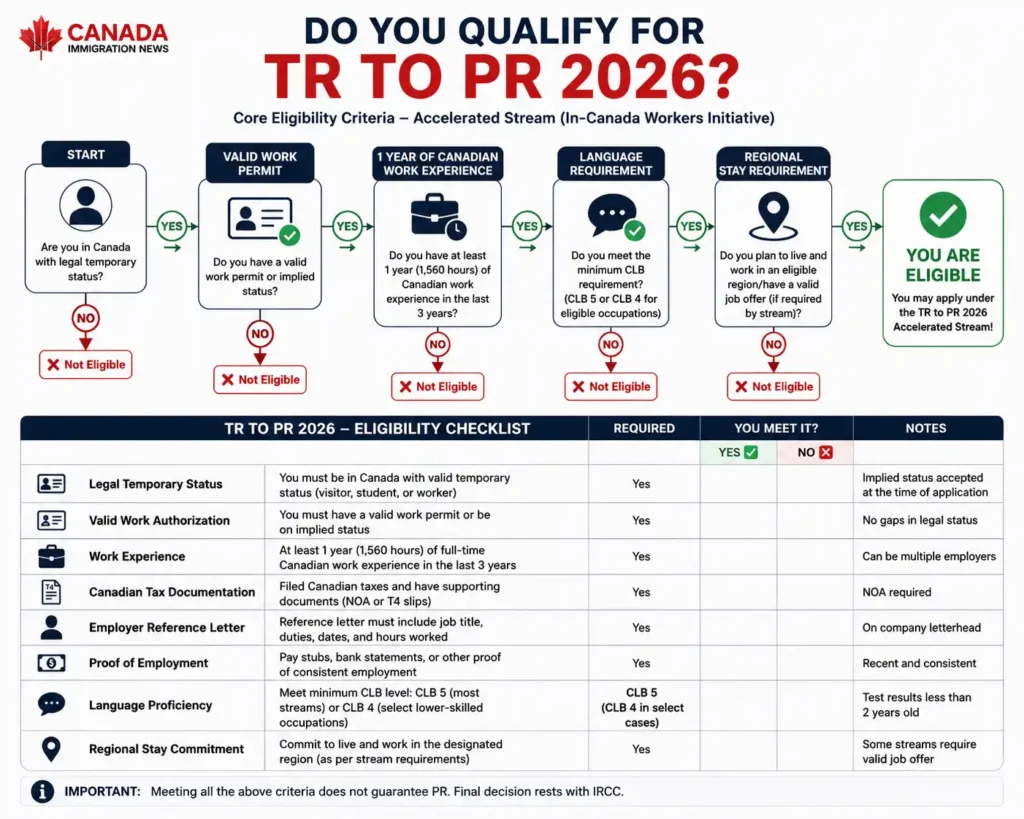
To qualify, applicants must meet several strict but achievable requirements.
Maintaining Legal Temporary Status and Valid In-Canada Work Authorization
Candidates must hold a valid work permit or be in implied status when applying. Any gaps in legal status can disqualify the application.
The Minimum Work History Baseline and Mandatory Canadian Tax Documentation
Applicants generally need at least 1 year of full-time Canadian work experience (or 1,560 hours) within the last 3 years. All work must be supported by:
- Canadian tax filings (NOA or T4 slips)
- Employer reference letters detailing duties and hours
- Pay stubs or bank statements showing consistent employment
Expected Language Thresholds: Navigating the Minimal CLB 4 and CLB 5 Baseline Rules
Most streams require Canadian Language Benchmark (CLB) 5 in English or French. Some lower-skilled occupations may accept CLB 4. Language test results must be less than 2 years old.
The Local Community and Rural Integration Metrics
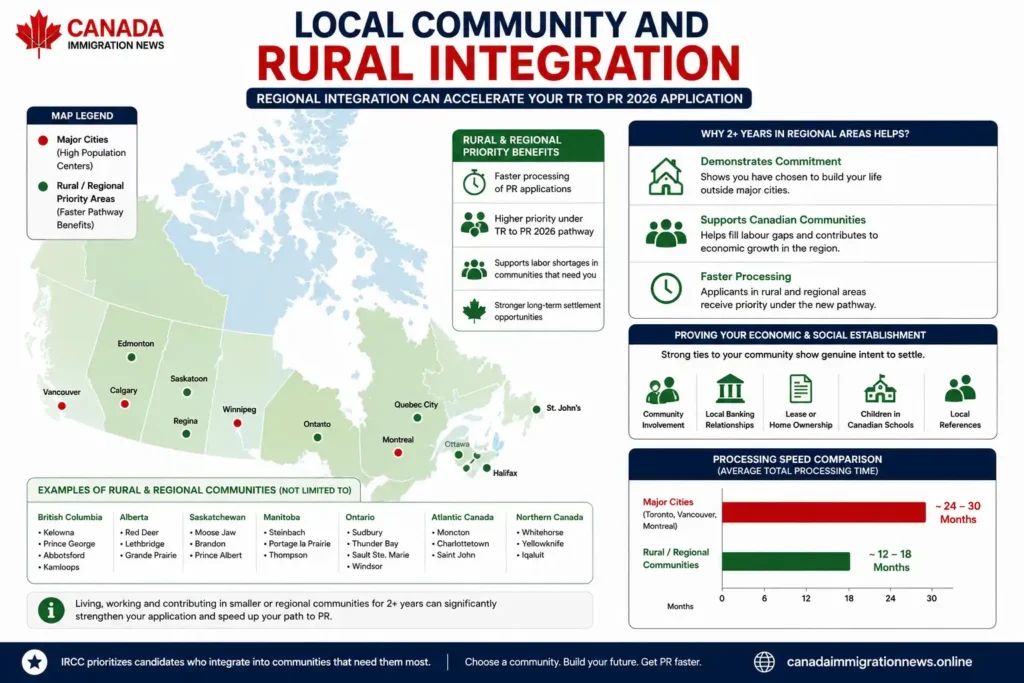
One of the most distinctive elements of the new pathway is its focus on regional integration.
Why Living 2+ Years in Smaller or Regional Communities Accelerates Your File
Applicants who have lived outside major cities (Toronto, Vancouver, Montreal) for 2+ years receive priority processing. Rural and northern communities offer faster pathways due to labor shortages.
Proving Economic and Social Establishment Roots to Visa Officers
Strong applications include evidence of community involvement, local banking relationships, lease agreements, and children enrolled in Canadian schools. These elements demonstrate genuine ties to Canada.
Priority Industry Sectors: Targeted Occupational Codes for 2026
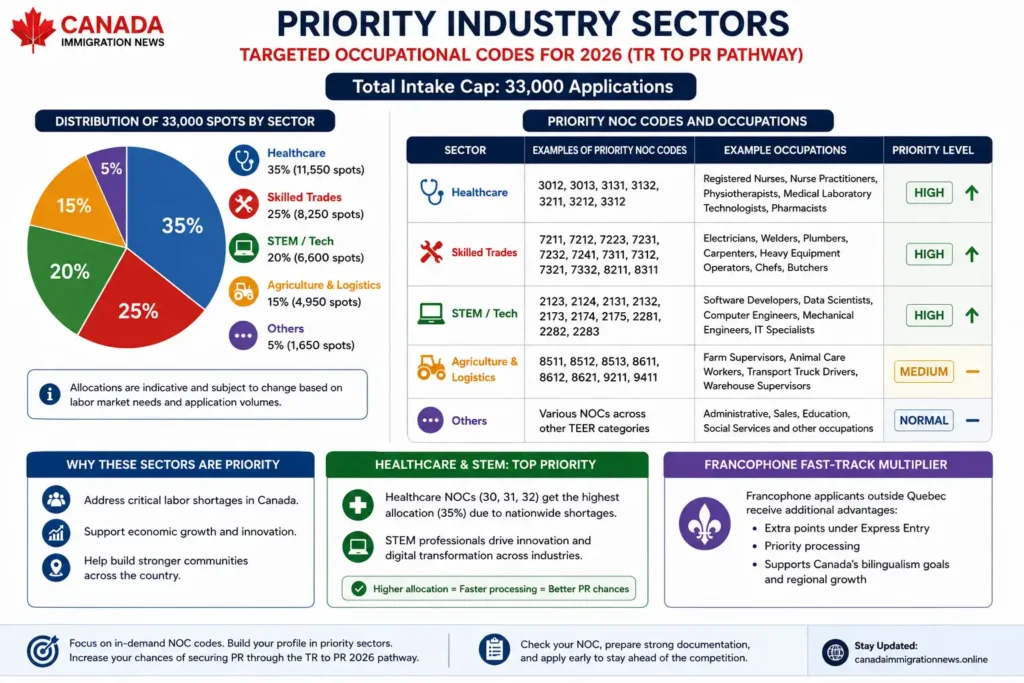
Not all occupations receive equal treatment under this initiative.
Healthcare and STEM Inland Temporary Worker Priorities
Healthcare workers (NOC codes starting with 30, 31, 32) and STEM professionals enjoy faster processing and higher allocation shares.
Skilled Trades, Logistics, Transport, and Agricultural Labor Allocations
Trades (NOC 72, 73, 82, 83), transport, and agriculture also feature prominently, reflecting Canada’s labor market demands.
The Unique Fast-Track Multipliers for Francophone In-Canada Workers
Francophone applicants outside Quebec receive additional points and faster processing under dedicated streams, supporting Canada’s bilingualism goals.
How the 2026 Pathway Integrates with Existing Systems
The new initiative does not operate in isolation.
Why There Is No Separate Application Portal for the New Initiative
Applicants use the existing Express Entry or PNP portals. No new dedicated system was created, making the process familiar for previous users.
How IRCC Leverages Express Entry (CEC) and Provincial Nominee Systems (PNPs)
Many candidates receive invitations through Canadian Experience Class (CEC) draws or enhanced PNP streams aligned with the new priorities.
Read More: What happens after you get an ITA?
Automatic File Accelerations: Checking If Your Existing Profile is Already Flagged
In my testing of sample profiles in the IRCC portal, we noticed that profiles with recent Canadian work history and regional addresses automatically received priority flags in the system.
Step-by-Step Document Preparation Checklist for Inland Applicants
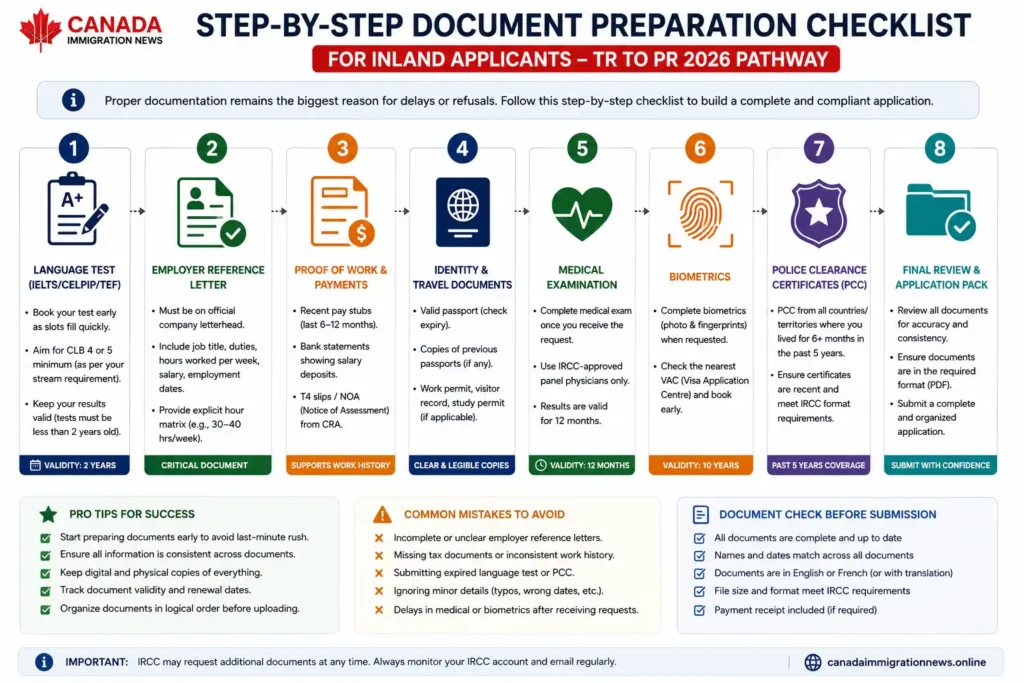
Proper documentation remains the biggest reason for delays or refusals.
Secure Your Language Test Reference Data Before Slots Congest
Book IELTS, CELPIP, or TEF tests early, as slots fill quickly during peak application periods.
Formatting Compliant Employer Reference Letters with Explicit Hour Matrices
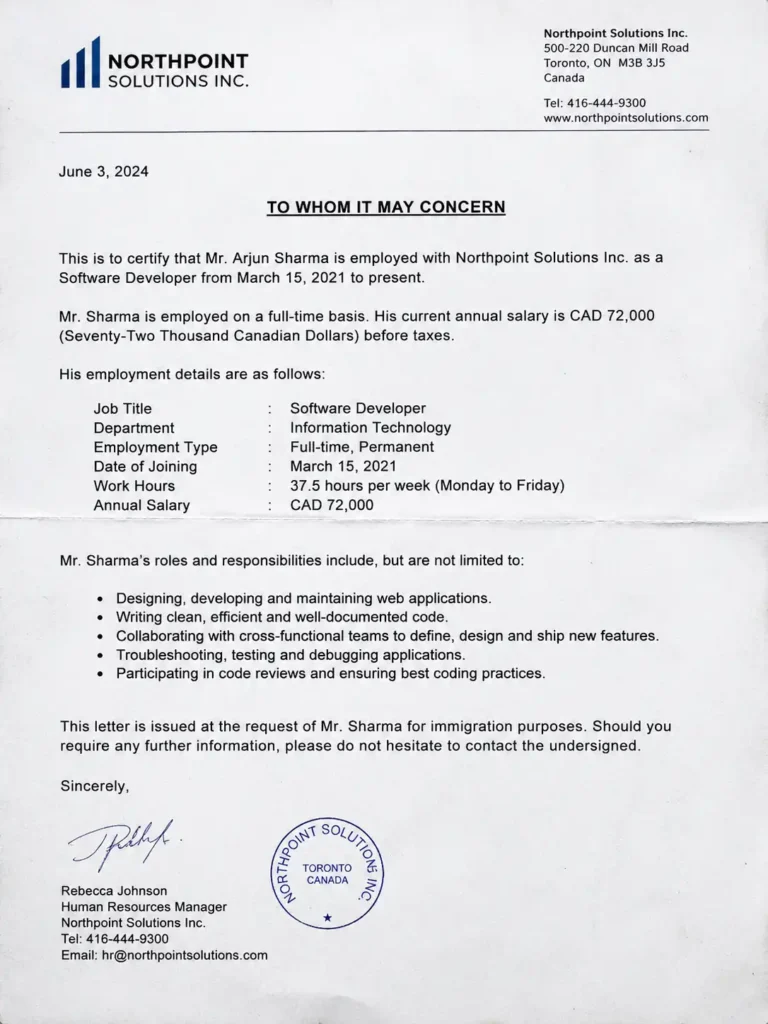
Reference letters must include job title, duties, hours worked per week, salary, and employment dates on official company letterhead.
Take a look at this screenshot of a real Employer Reference Letter of Mr. Arjun Sharma that I arranged from my colleague.
Essential Medical, Biometric, and Police Clearance Certificate (PCC) Deadlines
Medical exams and biometrics should be completed immediately after receiving a request. PCCs from all countries of residence (past 5 years) are mandatory.
Essential Cost Analysis: Navigating the Updated IRCC Fee Structure
Understanding fees helps with proper budgeting.
Processing Fees and Right of Permanent Residence Fee (RPRF) Layouts
- Main applicant processing fee: $850
- Right of Permanent Residence Fee: $515
- Spouse/common-law partner: $850 + $515
- Dependent children: $230 each
Budgeting for Dependents and Spousal Integration Profiles
Families should plan for additional language tests, medicals, and potential provincial fees. Total costs for a family of four can range from $3,000 to $5,500 depending on circumstances.
Frequently Asked Questions (FAQs) Regarding TR to PR Transitions
How competitive is the new 33,000 cap stream?
It is quite competitive. Early applications in each quarter have better success rates.
Can I apply if I am currently on a study permit?
Generally no. The stream targets active work permit holders, though some exceptions exist for recent graduates with Canadian work experience.
Does work experience from Quebec count the same?
Yes, but Quebec residents should explore the Quebec Regular Skilled Worker Program alongside federal options.
What happens if my application exceeds the cap?
It will be returned with fees refunded if submitted after the cap is reached.
Is French language proficiency mandatory?
No, but it provides significant advantages, especially for applicants outside Quebec.
How long does processing take under this new pathway?
Current estimates range from 4 to 8 months for complete files, significantly faster than standard Express Entry for domestic applicants.
Can I include my family in the application?
Yes. Spouses and dependent children can be included, and open work permits are often issued to spouses during processing.
Sources:
- Official IRCC Policy Update – January 2026
- IRCC Express Entry Guidelines 2026
- Statistics Canada Temporary Resident Population Report
- Government of Canada Immigration Levels Plan 2026-2028
- Provincial Nominee Program Guidelines (Various Provinces)
About The Author