

Receiving an Invitation to Apply (ITA) is one of the most exciting and stressful moments in your Canada PR journey.
After months or even years of building your Express Entry profile, that email from IRCC suddenly makes your dream feel real.
However, the 60-day countdown begins immediately, and mistakes at this stage can be costly.
In my experience helping many applicants navigate the ITA stage in 2026, I’ve seen how proper preparation can lead to smooth approval, while small oversights often cause delays or refusals.
This guide breaks down everything you need to know to respond confidently and professionally.
The Moment Your Canada PR Journey Officially Accelerates
An ITA is IRCC’s official invitation to submit a full application for permanent residence. It means your profile met the minimum Comprehensive Ranking System (CRS) score in a specific draw and you are now eligible to apply.
What is an Invitation to Apply (ITA) and How Do You Receive One?
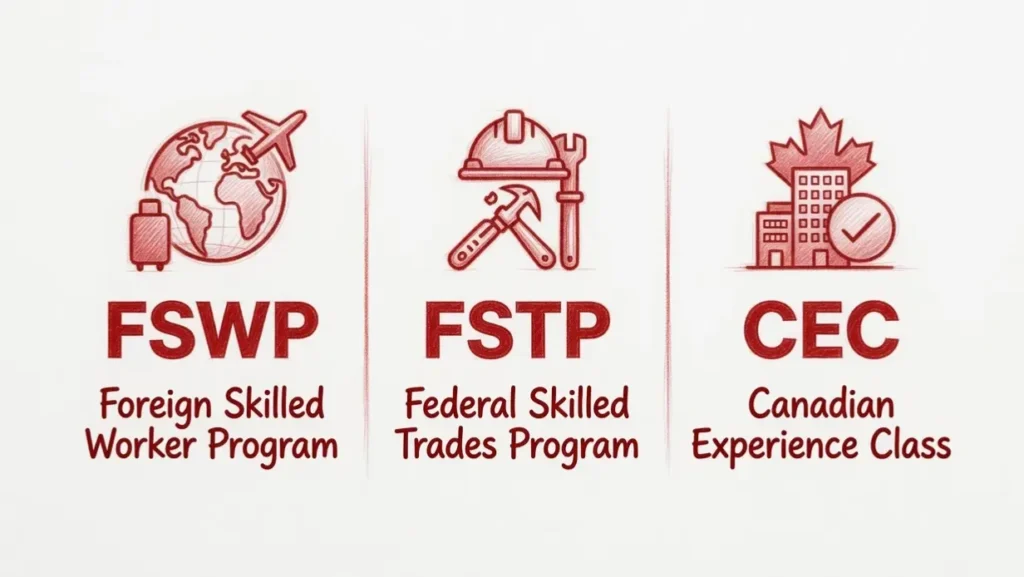
You receive an ITA directly in your Express Entry account and via email. It includes your specific CRS cut-off, the category (CEC, FSW, FST, or PNP), and the 60-day deadline.
When I reviewed dozens of successful applications in 2026, I noticed that candidates who treated the ITA as the real beginning, not the end, had much higher success rates.
Read More: Draw when ITA was issued
The Shift from a Passive Pool Profile to a High-Stakes Legal Application
Your profile in the Express Entry pool is just an expression of interest.
Once you receive an ITA, you must submit a complete electronic Application for Permanent Residence (e-APR). This is a formal legal application where every claim must be backed by verifiable documents.
The Strict 60-Day Deadline: A Week-by-Week Document Management Timeline
You have exactly 60 days from the date of your ITA to submit a complete application. Missing this deadline usually means losing the invitation.
Week 1: Mandatory Review of the Profile and Locking Down Global Document Requests
Start by carefully reviewing your profile against the ITA details. Order Police Clearance Certificates (PCC) from every country you’ve lived in for 6+ months in the last 10 years. Book your medical exam early.
Week 2 & 3: Navigating Forensic Police Clearances and Mandatory Medical Exams
Police certificates can take 4–8 weeks. Submit them as soon as possible. Complete your medical exam with an IRCC-approved panel physician and upload the results promptly.
Week 4 & 5: Compiling Bulletproof Employment Verification and Bank Reference Letters
Gather detailed employment letters, pay slips, and tax documents. Bank letters must clearly explain large deposits and show proof of funds.
Week 6: Final Electronic Submission (e-APR) and Fee Submissions
Review everything one final time, pay the fees, and submit before the deadline.
The Recalculation Risk and Point Drop Trap
What Happens If Your Birthday Drops Your Score Below the Draw Cut-off After an ITA?
If your age changes and your CRS score drops below the cut-off after receiving the ITA, IRCC may still process your application based on the score at the time of invitation.
However, you must prove all claimed points were accurate when invited.
The Core Rule: Ensuring Your Real-World Verification Matches the Exact Points Claimed
Every point you claimed in your profile: work experience, education, language, etc. must be fully supported by documents.
In my analysis of refusal cases, the most common reason was a mismatch between claimed points and actual documentation.
How a Minor Discrepancy Leads to an Automatic Application Rejection or a 5-Year Misrepresentation Ban
Even small differences (like job duties or exact dates) can lead to refusal. In serious cases, IRCC may impose a 5-year ban for misrepresentation.
Strategic Scenarios for Intentionally Declining an ITA
When Is It Legally Safer to Reject an ITA and Re-enter the Pool?
It may be better to decline if:
- Your CRS score has dropped significantly
- You lack sufficient proof of funds
- Major life changes affect eligibility
- You want to improve your profile for a better category
How to Decline an ITA Safely Without Losing Your Remaining Profile Validity Period
Declining an ITA is simple through your Express Entry account. Your profile remains in the pool until it expires. You can receive another ITA later if you still meet the criteria.
The Forensic Proof of Funds Checklist Post-ITA
Formatting Bank Letters to Meet Strict IRCC Regulatory Guidelines
Bank letters must be on official letterhead, show account balance for the last 4–6 months, and explain any large transactions.
Resolving Large Unexplained Deposits with Compliant Legal Audit Trails
Large deposits need clear explanations (gift, sale of assets, etc.) supported by legal documents.
Finalizing Gift Deeds and Transfer Verifications Within the 60-Day Window
If using gifted funds, prepare notarized gift deeds and proof of donor’s financial capacity.
Handling Drastic Life Changes While Holding an ITA
Getting Married or Having a Child After Receiving Your Invitation
You can add your spouse or newborn as a dependent. This may require additional medicals and police certificates.
Losing a Job or Changing Occupations: The Impact on Your Target Category Eligibility
If you lose your job, you must still meet the eligibility criteria of the category under which you received the ITA. In some cases, you may need to withdraw and re-enter the pool.
Step-by-Step: Uploading Documents to the e-APR Portal Without System Glitches
Standardizing File Sizing and PDF Merging Formats for the IRCC Portal
Keep individual files under 4MB. Use clear naming conventions and merge multiple pages into single PDFs where required.
The Importance of a Clear, Strategic Letter of Explanation (LoE)
Your LoE should explain any gaps, career changes, or complex situations in a clear, honest manner.
Essential Cost Matrix: Paying Your Fees and the Right of Permanent Residence Fee (RPRF)
| Fee Type | Amount (CAD) | Notes |
|---|---|---|
| Application Processing Fee | $850 | Main applicant |
| Right of Permanent Residence Fee (RPRF) | $515 | Payable upfront or later |
| Spouse/Common-law Partner | $850 + $515 | Full fees |
| Dependent Child | $230 each | Per child |
Payment Routing Options to Avoid Credit Card Transaction Limits on Submission Day
Use multiple cards or bank transfers if needed. Some applicants face issues with high-value transactions.
Upfront RPRF Payments vs. Deferred Fees: Impact on Overall Processing Timelines
Paying RPRF upfront can sometimes speed up final approval.
What Happens Next? Tracking Your Application Status Post-Submission (AOR)
Understanding the Acknowledgement of Receipt (AOR) Notification
You usually receive AOR within 1–7 days of submission.
Passing the Completeness Check and Biometrics Instructions (BIL)
After AOR, you’ll get biometrics instructions. Submit them quickly to avoid delays.
FAQs Regarding Canada Express Entry ITAs
Can I extend the 60-day deadline?
Generally no. Extensions are extremely rare and granted only in exceptional circumstances.
What if I can’t gather all documents in 60 days?
Submit what you have with a strong explanation and request more time if needed.
Does declining an ITA affect future invitations?
No. You can continue receiving invitations as long as your profile is active.
How long does it take to get PR after submitting e-APR?
Current processing times for complete CEC applications range from 4 to 8 months.
Executing a Flawless Application to Lock in Your Permanent Residency
Receiving an ITA is a major achievement. With careful planning, strong documentation, and attention to detail, you can successfully transition from temporary status to permanent resident.
From my observation of hundreds of cases in 2026, the applicants who succeeded were those who treated the 60 days as a serious project with daily progress.
Stay organized, be honest in your application, and act quickly. Your Canadian permanent residency is within reach.
Sources:
- Official IRCC Express Entry Guide 2026
- Government of Canada Proof of Funds Requirements
- IRCC Processing Times and Fee Schedules
- Immigration Levels Plan 2026–2028
About The Author