

Canada’s Express Entry system continues to evolve to meet the country’s economic and labour market needs. In February 2026, Immigration, Refugees and Citizenship Canada (IRCC) announced significant updates to its category-based selection for 2026.
These changes introduce new targeted categories while renewing and refining existing ones. The goal is to attract talent in high-priority sectors such as healthcare, education, STEM, trades, transport, research, leadership, and national defence.
Today in this detailed guide, I will explain everything you need to know about the new Express Entry categories for 2026, including eligibility, benefits, how category-based draws work, and practical advice for applicants.
What Are Express Entry Category-Based Draws?
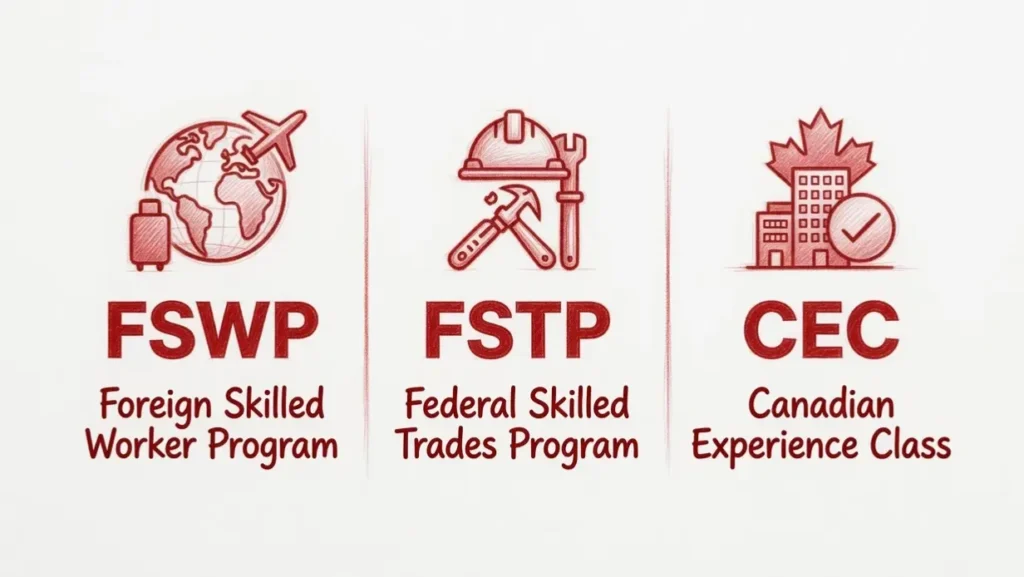
Express Entry manages applications for permanent residence through three main programs: Federal Skilled Worker Program (FSWP), Canadian Experience Class (CEC), and Federal Skilled Trades Program (FSTP).
Candidates create a profile and receive a Comprehensive Ranking System (CRS) score based on factors like age, education, work experience, language proficiency, and adaptability.
Category-based draws allow IRCC to invite candidates who meet specific criteria, even if their CRS scores are lower than in general draws.
These targeted rounds help fill labour shortages in key occupations and support national priorities like bilingualism and economic growth.
In 2026, category-based invitations supplement general, program-specific, and Provincial Nominee Program (PNP) draws. Candidates must still meet the minimum requirements of one of the Express Entry programs to enter the pool.
Major Changes in 2026 Express Entry Categories
IRCC has expanded the list to ten categories. Several existing ones continue with updated rules, while new ones focus on specialized talent with Canadian work experience.
Key updates include:
- Increased minimum work experience requirement (from 6 months to 1 year in the last 3 years) for many categories.
- Strong emphasis on candidates with Canadian work experience in priority fields.
- Continued priority for French-language proficiency to support bilingual communities outside Quebec.
- New pathways for physicians, researchers, senior managers, transport workers, and military recruits.
Full List of 2026 Express Entry Categories
Here is a breakdown of all active categories for 2026:
1. French-Language Proficiency
This remains one of the strongest categories. Candidates with strong French skills (CLB 7 or higher in all abilities) receive invitations at significantly lower CRS scores. This category supports francophone immigration targets outside Quebec.
2. Healthcare and Social Services Occupations

Includes nurses, doctors (in the new dedicated category), therapists, social workers, and related roles. Addresses ongoing shortages in hospitals and community services.
3. Science, Technology, Engineering, and Math (STEM) Occupations
Covers software engineers, data scientists, biologists, engineers, and other technical roles critical for innovation and economic growth.
4. Trade Occupations
Targets skilled tradespeople such as electricians, plumbers, carpenters, welders, and heavy equipment operators. Supports infrastructure and construction projects.
5. Education Occupations
Includes teachers, professors, early childhood educators, and administrative roles in the education sector.
6. Transport Occupations
A new or expanded category covering pilots, aircraft mechanics, truck drivers, logistics managers, and railway workers. Helps address supply chain and aviation needs.
7. Physicians with Canadian Work Experience
One of the standout new categories for 2026. Foreign-trained medical doctors who have gained Canadian work experience can benefit from targeted invitations to help ease physician shortages across provinces.
8. Senior Managers with Canadian Work Experience
Designed for leadership talent. Senior managers in various sectors who have Canadian experience can receive priority to support business growth and multinational operations.
9. Researchers with Canadian Work Experience
Supports Canada’s innovation agenda. Academics, scientists, and researchers with Canadian experience in universities or industry labs are prioritized.
10. Skilled Military Recruits
Targets foreign military personnel with job offers from the Canadian Armed Forces. This category strengthens national defence capabilities.
How Category-Based Selection Works in Practice
To qualify for a category draw, candidates must:
- Have an active Express Entry profile.
- Meet the specific eligibility criteria for the category (e.g., occupation on the list, required work experience, language level).
- Score high enough within that category’s pool during the draw.
IRCC publishes the list of eligible National Occupational Classification (NOC) codes for each category on its official website. Draws occur regularly, and invitation numbers vary based on annual targets.
Category draws often have much lower CRS cut-offs (sometimes in the 300s or 400s) compared to general draws (frequently above 500). This creates realistic opportunities for candidates who might not succeed in all-program draws.
Benefits of the 2026 Category Updates
The new structure offers several advantages:
- Faster Processing: Targeted candidates often receive Invitations to Apply (ITAs) sooner.
- Lower CRS Requirements: Opens doors for strong specialists who may lack high scores in other areas.
- Alignment with Labour Needs: Better matches immigrants with real job shortages.
- Support for Key Sectors: Healthcare, education, trades, and research benefit most.
- Encouragement of Canadian Experience: New categories reward those who have already worked or studied in Canada.
Who Should Target These Categories?

Healthcare Professionals: Nurses, doctors, and allied health workers have excellent chances, especially with the new physician pathway.
STEM Graduates and Workers: Tech talent continues to be in high demand.
Tradespeople: Construction and skilled trades face chronic shortages across Canada.
Educators: Teachers and professors can benefit from the dedicated education category.
French Speakers: Bilingual candidates (especially those strong in French) enjoy one of the most consistent advantages.
Researchers and Academics: Those with Canadian connections now have a clearer route.
Senior Leaders and Managers: Experienced executives with Canadian work history gain priority.
Military Personnel: Qualified recruits with job offers from the Canadian Forces have a specialized stream.
Step-by-Step Guide to Maximizing Your Chances
- Create or Update Your Express Entry Profile — Ensure all information is accurate and up-to-date.
- Assess Your Eligibility — Check which categories you qualify for using IRCC’s occupation lists.
- Improve Key Factors — Focus on language tests (especially French), Canadian work experience, and education credentials.
- Gather Supporting Documents — Prepare proof of work experience, language results, and job offers if applicable.
- Monitor Draws — Follow official IRCC announcements for category-based rounds.
- Consider Provincial Nominees — Combine category eligibility with PNP for even stronger applications.
- Seek Professional Help — Consult a regulated immigration consultant or lawyer for complex cases.
Potential Challenges and Important Considerations
While category draws are advantageous, they come with nuances:
- Work experience requirements are stricter (1 year minimum in many cases).
- Occupations must match exact NOC codes.
- Competition within popular categories can still be high.
- French proficiency testing requires preparation.
- Processing times and medical/admissibility checks remain standard.
Additionally, broader Express Entry reforms are under discussion for 2026–2027, including possible consolidation of programs and CRS adjustments. Applicants should stay informed through official channels.
Future Outlook for Express Entry
The 2026 categories reflect Canada’s strategy to balance immigration volumes with economic needs. By targeting specific skills and experience, IRCC aims to improve newcomer outcomes and support key industries.
Expect continued category draws throughout the year, with possible adjustments based on labour market data.
For many applicants, these targeted pathways represent the most realistic route to Canadian permanent residence in 2026.
Summary Comparison: Old vs New Approach
Category-based selection has matured significantly. The addition of specialized streams for physicians, researchers, senior managers, transport, and military personnel makes the system more responsive.
Combined with renewed focus on French, healthcare, STEM, trades, and education, the 2026 framework offers diverse opportunities for skilled workers worldwide.
Whether you are a healthcare professional facing shortages in Canada, a tech expert, a tradesperson, or a bilingual talent, there is likely a category that aligns with your profile.
Final Advice: Regularly check the official IRCC Express Entry page for the latest occupation lists and draw results. Prepare strong language scores, gain relevant Canadian experience where possible, and act quickly when draws are announced.
Read More: Upcoming Draw Predictions
By understanding and targeting the right category, you can significantly improve your chances of receiving an Invitation to Apply for permanent residence in Canada in 2026 and beyond.
Helpful Links:
About The Author