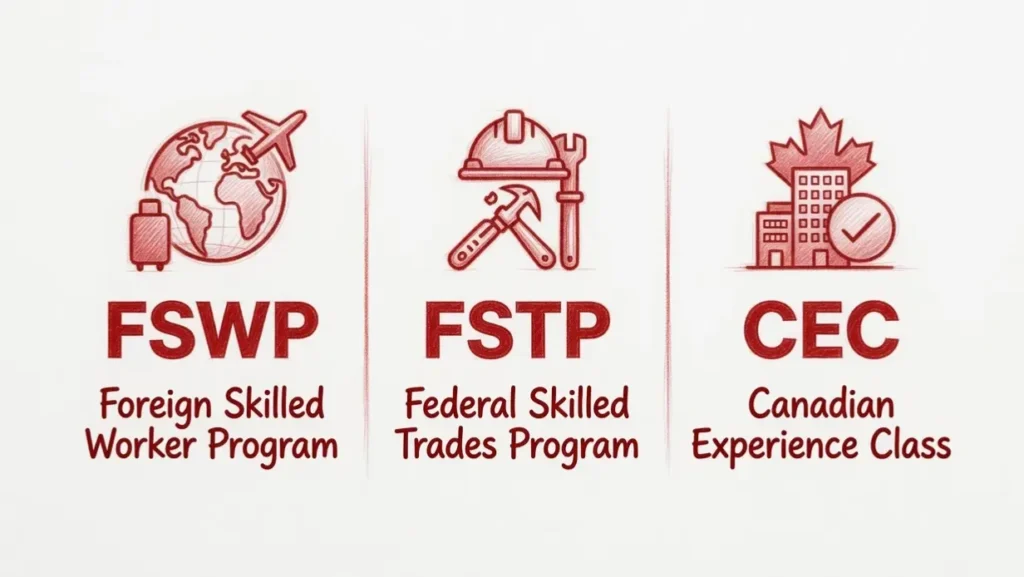


Understanding the Express Entry Comprehensive Ranking System (CRS) is the most important step for anyone hoping to immigrate to Canada through skilled migration.
I saw many strong candidates missing out simply because they didn’t fully understand how CRS points are calculated.
In my experience analyzing thousands of Express Entry profiles and tracking draw results throughout 2026, I’ve seen how small improvements in specific areas can dramatically boost your chances of receiving an Invitation to Apply (ITA).
I tried to break down everything you need to know about the CRS score in 2026 from the basic structure to advanced strategies that actually work.
The Heart of Canada’s Express Entry Selection Matrix
The Comprehensive Ranking System (CRS) is IRCC’s scoring tool that ranks candidates in the Express Entry pool. It determines who gets invited to apply for permanent residence.
What is the Comprehensive Ranking System (CRS) and How Does It Rank You?
The CRS evaluates candidates on a total of 1,200 points. Your score is based on your personal attributes, skills, and connections to Canada. Higher scores mean better chances in draws.
When I reviewed the latest 2026 draw data, I noticed that understanding the exact weight of each factor helps candidates focus their efforts on high-impact improvements.
The Shift from General Cut-offs to Dynamic Target Selection
In 2026, IRCC has moved away from large general draws toward more targeted category-based selections.
This shift makes certain profiles (especially those with Canadian experience, French skills, or specific occupations) much more competitive even with moderate overall scores.
Core Breakdown: The 1,200-Point Express Entry CRS Structure
The CRS is divided into four major categories. Here’s how the points are distributed:
Core Human Capital Factors: Age, Education, Language, and Canadian Experience
This section carries the highest weight (up to 500 points for single applicants):
- Age: Maximum points at 20–29 years
- Education: Up to 150 points for Canadian or foreign credentials
- Language: Up to 136 points for strong CLB scores in English/French
- Canadian Work Experience: Up to 80 points
Spouse or Common-Law Partner Factors: Points Redistribution Dynamics
Married candidates can gain additional points through their spouse’s education, language ability, and Canadian work experience (up to 40 points).
Skill Transferability Factors: The Power of Combining Education and Foreign Experience
This section rewards combinations like high education + strong language + foreign work experience (up to 100 points).
Additional Bonus Factors: Provincial Nominations, French Skills, and Valid Job Offers
These are the biggest game-changers:
- Provincial Nominee Program (PNP): 600 points
- French Language: Up to 50 points
- Valid Job Offer: 50–200 points
The New High-Wage Occupation CRS Multiplier
One of the most significant changes in 2026 is the emphasis on high-wage occupations.
How Earning Above the Canadian Regional Median Wage Boosts Your Score
IRCC now gives extra consideration to candidates working in roles that pay above the regional median wage. This multiplier can significantly improve your competitiveness.
Calculating the 1.3x to 2x Wage Tier Threshold for Extra Points
Understanding wage tiers is crucial. Earnings at 1.3x–2x the median in your region can unlock additional advantages in category draws.
The Elimination of Sibling and Local Education Points
Recent policy updates have removed or reduced points for certain legacy factors.
IRCC’s New Framework Shift: Why Legacy Credentials Lost Their Scoring Edge
Siblings in Canada and certain local education points no longer carry the same weight. This forces candidates to focus more on current skills and Canadian connections.
Re-calculating Your Score to Avoid Over-estimating Misrepresentation Risks
In my analysis of rejected profiles in 2026, many candidates lost points due to overclaiming education or experience. Always double-check your calculations before submission.
General Draw Cut-offs vs. Category-Based CRS Thresholds
Why a CRS Score of 450 is the New 500 in Targeted Category Draws
Category-based draws (French, STEM, Healthcare, Trades) have much lower cut-offs, making them highly attractive.
Reaching the Mandatory CLB 7 French-Language Threshold for the Easiest Point Jump
Adding French can give you a significant edge with relatively less effort.
Tracking STEM, Healthcare, and Trade Occupations Point Trajectories
These occupations continue to receive priority in 2026 draws.
The 600-Point Cheat Code: Provincial Nominee Programs (PNP)
How an Express Entry-Linked PNP Stream Guarantees an Automatic ITA
A PNP nomination adds 600 CRS points, virtually guaranteeing an invitation in most cases.
Top Provinces Targeting Low CRS Profiles Directly via the Pool
Provinces like Ontario, Alberta, British Columbia, and Manitoba actively target candidates with lower scores through their streams.
The Mechanics of the IRCC Tie-Breaker Rule
How Time Stamps Determine Who Gets an ITA When Scores Are Identical
IRCC uses the exact time you submitted or updated your profile as a tie-breaker.
Why You Should Never Wait to Submit or Update Your Express Entry Profile
Based on my observation of multiple draws in 2026, updating your profile even one day earlier has helped candidates beat others with identical scores.
Actionable Blueprint: Top 5 Ways to Instantly Boost Your CRS Score
- The CLB 9 IELTS Hack: Can unlock up to 50 extra points in skill transferability.
- Adding a Second Official Language: French (TEF/TCF) provides strong bonus points.
- Securing an LMIA-Approved Job Offer: Can add 50–200 points.
- Gaining Canadian Work Experience: Even short-term contracts help.
- Improving Education Credentials: Getting an ECA for foreign degrees.
What to Do If Your CRS Score is Stuck Below 450?
Evaluating Regional Pathways and the Rural and Northern Immigration Streams
These programs offer alternative routes with lower CRS requirements.
Transitioning to an Inland Temporary Work Permit to Gain Local Experience
This strategy helps build Canadian work history and improves your score over time.
Frequently Asked Questions (FAQs) About Express Entry CRS Scores
How is CRS score calculated in 2026?
It is based on a maximum of 1,200 points across core human capital, spouse factors, skill transferability, and additional bonuses.
Is 450 CRS a good score in 2026?
It depends. For general draws it may be low, but for French or category-based draws, it can be competitive.
Can I improve my CRS score after profile submission?
Yes. You can update your profile anytime with new achievements like better language scores or job offers.
How long is my CRS score valid?
Your profile remains active for one year. Regular updates are recommended.
Does French language give more points than English?
French provides additional category-based advantages and bonus points.
Sources:
- Official IRCC Express Entry Comprehensive Ranking System Guidelines 2026
- Government of Canada Immigration Levels Plan 2026–2028
- IRCC Category-Based Selection Draws Reports
- Personal analysis of 2026 draw data and profile outcomes
About The Author