

Canada’s economic immigration system relies heavily on one key element that many applicants underestimate: the NOC Code.
Getting this right can mean the difference between a successful Permanent Residency application and a refusal.
With thousands of candidates competing in Express Entry draws every month, understanding how NOC codes work has never been more important.
This detailed guide breaks down everything you need to know about NOC codes in 2026, including the latest updates, how to choose the correct code, and the common mistakes that lead to immediate rejections.
What is a NOC Code and Why Does IRCC Use It?
Understanding the National Occupational Classification System
The National Occupational Classification (NOC) system is Canada’s official list of job titles and descriptions. Statistics Canada maintains it and updates it regularly to reflect changes in the labor market.
Each occupation gets a unique five-digit code that describes what the job involves, the skill level required, and the main duties.
IRCC uses NOC codes to assess whether an applicant’s work experience qualifies for different immigration programs.
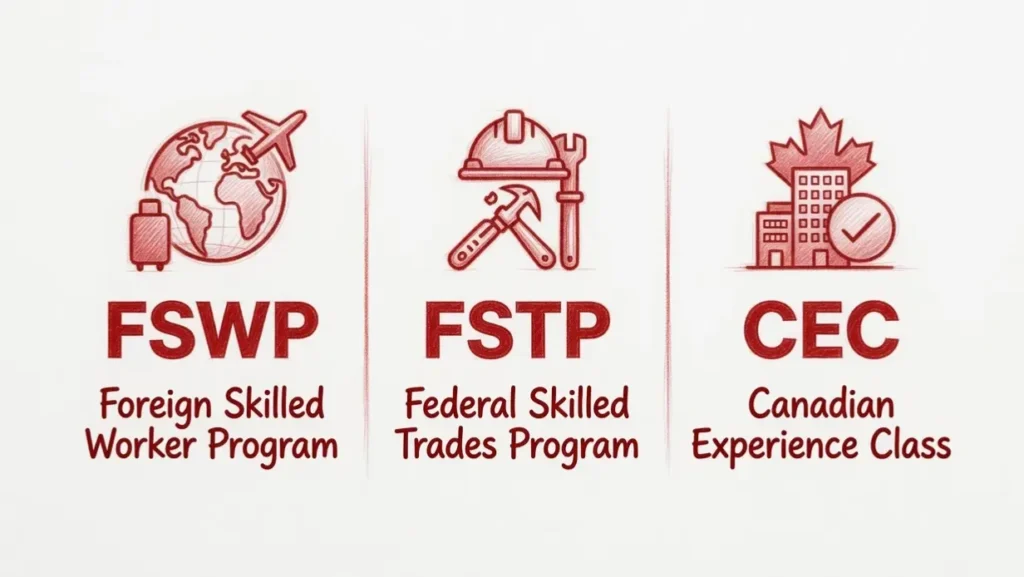
The code helps officers quickly determine if your past roles match the requirements for programs like Federal Skilled Worker, Canadian Experience Class, or Provincial Nominee Programs.
Read More: Which program your NOC qualifies for?
How Your NOC Code Directly Dictates Your Canada PR Eligibility
Your chosen NOC code affects multiple parts of your application. It determines your eligibility for specific streams, influences your Comprehensive Ranking System (CRS) points, and decides whether you qualify for category-based selection draws.
A wrong code can make your entire profile ineligible, even if you have strong education and language scores.
For example, many management roles fall under TEER 0, which opens doors to more programs. Technical jobs usually sit in TEER 2 or 3. Choosing the wrong category can cost you valuable points or lead to a refusal.
Deciphering the 5-Digit TEER System (0, 1, 2, 3, 4, 5)
The first digit of the NOC code shows the TEER category. TEER stands for Training, Education, Experience, and Responsibilities. This system replaced the old Skill Level structure in 2022 and remains in effect with some updates in 2026.
TEER 0 & 1: Executive Management and Professional Roles
TEER 0 covers management positions across industries. TEER 1 includes professional roles that usually require a university degree. Examples include software engineers, doctors, financial analysts, and university professors.
These categories generally give the strongest Express Entry profiles because they qualify for the Federal Skilled Worker Program and often receive invitations in category-based draws.
TEER 2 & 3: Technical Occupations and Skilled Trades
TEER 2 and TEER 3 cover technical jobs and skilled trades. These usually require a college diploma, apprenticeship training, or several years of on-the-job experience. Examples include electricians, dental hygienists, graphic designers, and chefs.
Many of these occupations remain eligible for Express Entry and Provincial Nominee Programs, especially in trades and healthcare support roles.
TEER 4 & 5: Semi-Skilled and Low-Skilled Labor Dynamics
TEER 4 and TEER 5 include jobs that typically require high school education or short on-the-job training. Examples include retail salespersons, food service workers, and general laborers.
These categories have limited eligibility for Federal Skilled Worker but can qualify under certain Provincial Nominee streams or the Canadian Experience Class if the work was done in Canada.
Urgent 2026 Update Gap: The Major NOC Overhaul and Affected Categories
Why the 2026 Major Revision is Shaking Up 165 Job Categories
Statistics Canada implemented a significant update to the NOC system in late 2025, with full effects rolling out throughout 2026.
This revision restructured 165 job categories to better match current labor market needs. Some jobs moved to higher TEER levels, while others shifted categories entirely.
The changes reflect growth in technology, healthcare demands, and green economy roles. Applicants must check the new codes carefully because using an outdated version can lead to refusals.
The Restructuring of Healthcare, IT, and Educational Unit Groups
Healthcare saw several updates. Nursing assistants and patient service workers received clearer distinctions. In IT, new codes emerged for specialized roles in cybersecurity, data science, and AI systems. Education roles also changed, with more granular classifications for early childhood educators and online learning specialists.
These shifts matter because some roles that previously qualified under one stream may now fall under different eligibility rules.
Gradual System Adoption: How the Phase-in Timeline Impacts Current Candidates
IRCC is using a gradual phase-in approach. Applications submitted before March 2026 can still use the 2021 NOC version in some cases, but newer profiles must align with the 2025/2026 structure. Candidates should verify their codes using the latest tools to avoid delays or returns.
Step-by-Step Guide: How to Find Your Exact NOC Code Correctly
Utilizing the Official Statistics Canada and IRCC Search Tools
Start at the official Statistics Canada NOC website. Enter your job title in the search bar. Review the matching results and read the full description for each code. Cross-check with IRCC’s eligibility tools.
The Government of Canada also provides a job bank search that links directly to NOC codes. Use both platforms for confirmation.
The Master Formula: Mapping Your Real-World Daily Work Experience
Match your actual daily tasks, not just your job title. List your main responsibilities from the past three to ten years. Compare them against the “Main Duties” section of potential NOC codes. The best match should cover at least 70-80% of your listed tasks.
Take notes on percentages of time spent on each duty. This helps when writing reference letters and responding to officer queries.
The Job Title Trap vs. Main Duties Requirement
Why a Matching Job Title Means Absolutely Nothing to an IRCC Officer
IRCC officers focus on duties performed, not job titles. Two people with the same title at different companies can have completely different responsibilities. An officer will reject an application if the described duties do not match the chosen NOC code.
Evaluating the Official “Lead Statement” and “Essential Tasks” of a Code
Every NOC code includes a lead statement that summarizes the occupation and a list of essential tasks. Read these carefully. Your reference letters and application forms must clearly demonstrate that you performed a substantial number of these tasks.
How to Format Your Employment Reference Letter to Mirror Your Code Legally
Write reference letters on company letterhead with clear dates of employment. List duties in bullet points that closely follow the language used in the NOC code’s main duties section. Include the percentage of time spent on key responsibilities. Have your employer sign and date the letter.
Overlapping Duties and Choosing a “Primary NOC”
Managing Split Responsibilities (e.g., Balancing TEER 2 and TEER 3 Tasks)
Many jobs involve duties from multiple TEER levels. In such cases, identify the primary occupation — the one where you spend the majority of your time. Document this clearly with time allocation percentages.
Rules for Calculating Cumulative Experience Across Different NOC Codes
IRCC allows combining experience from different NOC codes if they are at the same TEER level or meet specific program rules. Calculate total eligible months carefully. Only full-time equivalent experience counts toward the minimum requirements.
The 2026 PR Cap Reductions: Which NOC Codes are Safest for Express Entry?
High-Priority Codes for Category-Based Selection Draws (STEM, Healthcare, Trades)
Certain NOC codes receive priority in category-based draws. These include many STEM occupations, healthcare roles, and skilled trades. Keeping your primary NOC within these targeted categories increases invitation chances significantly.
The Risk Factor: Low-Demand NOC Codes Stuck in General Draws
Occupations outside priority categories face much higher competition in general draws. Scores needed for invitations in these pools often exceed 520-530 points, making them riskier for candidates with average profiles.
Common Mistakes That Lead to Instant Application Rejections
Selecting an Ineligible TEER Level for the Federal Skilled Worker Stream
Choosing a TEER 4 or 5 code when applying under Federal Skilled Worker almost always results in refusal. Double-check eligibility requirements before finalizing your profile.
Misrepresentation Risks: Intentional Code Inflation to Boost CRS Points
Intentionally selecting a higher-level NOC code than your actual duties warrant counts as misrepresentation. This can lead to a five-year ban from applying to any Canadian immigration program. Always choose the most accurate match.
Frequently Asked Questions (FAQs) About Canada NOC Codes
Can I use more than one NOC code in my Express Entry profile?
You can claim experience from multiple NOC codes, but you must select one primary code for your profile. List additional experience in the employment history section.
How often does the NOC system change?
Major updates happen every five to ten years, with smaller adjustments in between. The 2026 version is the current standard.
Does my job title need to match the NOC title exactly?
No. The duties matter more than the exact title. Many real-world job titles differ from official NOC descriptions.
What happens if IRCC disagrees with my chosen NOC code?
The officer may request more evidence or reassign your code. In serious mismatches, they can refuse the application.
Are all NOC codes eligible for Express Entry?
No. Only TEER 0, 1, 2, and 3 generally qualify for Federal Skilled Worker and Canadian Experience Class. TEER 4 and 5 have limited pathways.
How far back can I claim work experience for NOC codes?
You can claim experience from the last 10 years for most programs, but only experience gained within the last 3 years counts toward the one-year minimum requirement in some streams.
Should I update my NOC code if my duties changed recently?
Yes. Always use the code that best reflects your most recent and substantial experience.
This guide provides the foundation you need to select the right NOC code and strengthen your Canadian immigration application.
Taking time to match duties accurately and prepare strong supporting documents remains one of the most effective ways to improve your chances of success.
About The Author